
The cladding you choose for your garden room defines its character more than almost any other decision. It is the finish you see from the garden, from the house, and from neighbouring properties. Get it right, and the building feels like it belongs. Get it wrong, and even a well-built structure looks out of place.
This guide compares the most popular cladding materials for Hertfordshire garden rooms and explains how to choose.
Why cladding matters
Garden room cladding serves three purposes:
- Weather protection — shielding the structural frame and insulation from rain, wind, and UV
- Aesthetics — defining the building’s visual character and relationship with its setting
- Longevity — quality materials age gracefully and reduce maintenance over decades
The best cladding choice depends on your property’s architecture, the garden setting, your personal taste, and how much maintenance you are prepared to undertake.
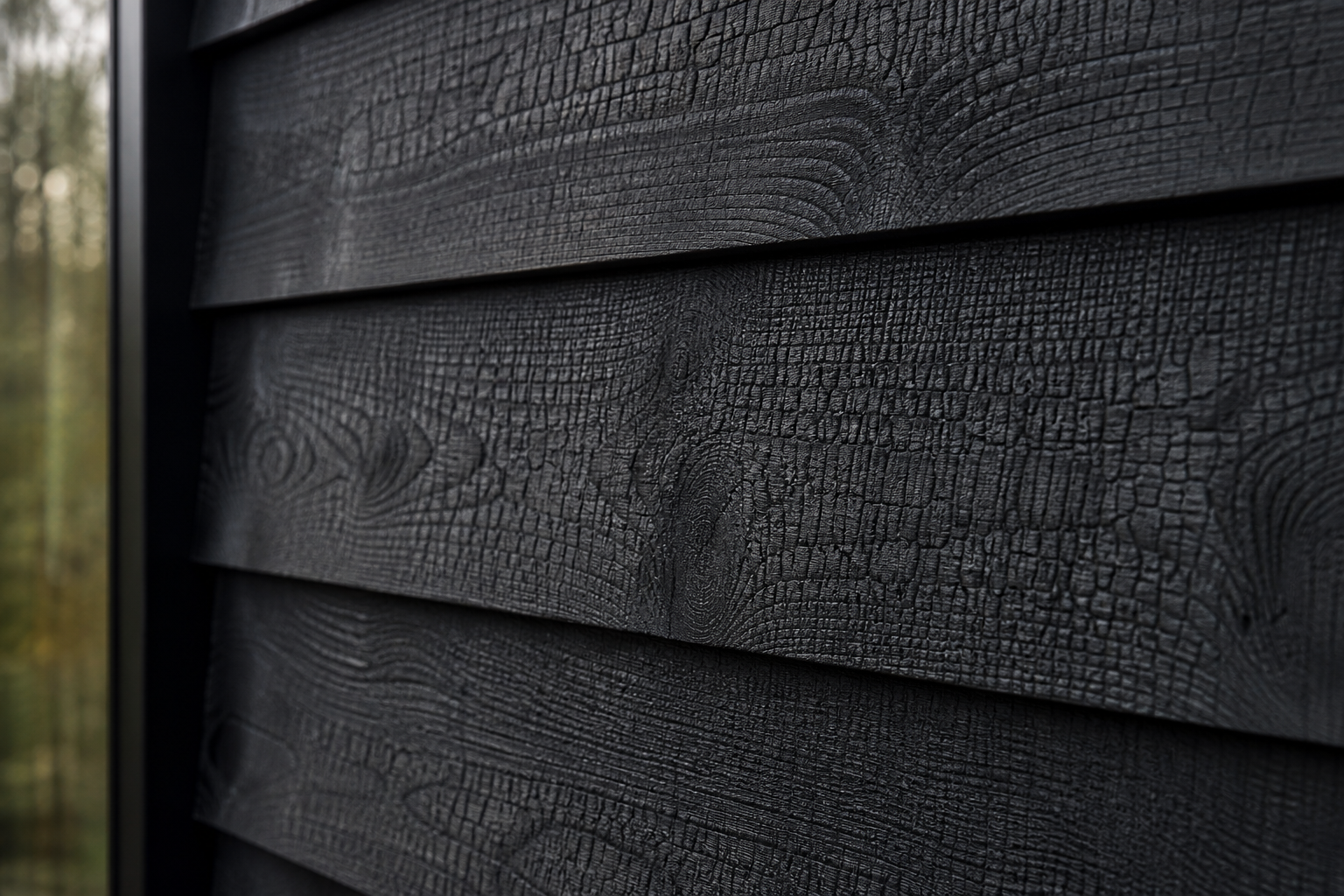 Charred timber offers a dramatic, low-maintenance exterior with distinctive grain.
Timber cladding
Timber is the most popular cladding material for bespoke garden rooms. It is natural, warm, and ages beautifully.
Western red cedar
- Appearance — warm honey tones that silver to soft grey over 12–24 months
- Durability — naturally resistant to decay and insects; 25–40 year lifespan untreated
- Maintenance — zero maintenance if you accept the silvering; annual oiling if you want to retain colour
- Best for — contemporary and traditional gardens alike; pairs well with glass
European larch
- Appearance — pale golden timber with visible grain; silvers similarly to cedar
- Durability — good natural durability; slightly less than cedar but excellent value
- Maintenance — low; accepts stains and oils if colour retention is desired
- Best for — painted or natural finishes; horizontal and vertical boarding
Painted timber
- Appearance — any colour; popular choices include sage green, charcoal, off-white, and deep blue
- Durability — depends on timber species beneath; paint provides additional weather protection
- Maintenance — repaint every 5–8 years to maintain appearance
- Best for — matching or complementing period property colours; cottage-style annexes
Charred timber (Shou Sugi Ban)
Charred timber has become increasingly popular for contemporary garden rooms:
- Appearance — deep black with textured grain; striking and architectural
- Durability — the charring process creates a natural preservative layer; excellent longevity
- Maintenance — very low; the charred surface does not need treatment
- Best for — contemporary garden rooms, contrast with planting and pale render
Charred timber works particularly well on garden elevations with large glazing panels — the dark cladding frames the glass beautifully.
Composite cladding
Composite cladding combines wood fibres with polymer resins:
- Appearance — consistent colour and texture; available in wood-effect and solid colours
- Durability — excellent; resistant to rot, warping, and UV fading
- Maintenance — very low; occasional cleaning with water
- Best for — modern garden rooms, gyms, and buildings where zero maintenance is a priority
Composite cladding lacks the warmth and variation of real timber but offers predictability and longevity that appeals to many homeowners.
Mixed and feature cladding
Some of our most successful garden room designs combine materials:
- Charred timber on the garden elevation with painted timber on side walls
- Cedar boarding below a rendered upper section
- Vertical cladding contrasted with horizontal boarding on different elevations
Mixed cladding adds visual interest and helps the building relate to properties with varied materials.
Cladding orientation
The direction of boarding affects appearance:
- Horizontal — contemporary, architectural, makes buildings appear wider
- Vertical — traditional, makes buildings appear taller; suits pitched-roof annexes
- Diagonal or feature patterns — occasional use for visual interest on feature walls
Choosing cladding for your property
Consider these factors when selecting cladding:
| Property type | Recommended cladding |
|---|---|
| Victorian terrace | Painted timber in complementary colour |
| 1930s semi | Cedar or larch, horizontal |
| Modern new-build | Charred timber or composite |
| Period cottage | Painted timber, vertical; pitched roof |
| Village property | Cedar or painted timber; traditional proportions |
Your garden room should complement your home without mimicking it. A contemporary cedar studio beside a Victorian villa works when proportions and detailing are respectful.
Cladding and planning
In conservation areas, the choice of cladding material and colour may be scrutinised by the planning authority. Natural timber and muted painted colours are generally preferred over bright colours or synthetic-appearing finishes.
We advise on material selection during your glazing, cladding and finishes consultation, taking into account planning constraints, garden setting, and personal preference.
See cladding in context
Browse our gallery for examples of cedar studios in Harpenden, charred timber garden rooms in Welwyn Garden City, and painted annexes in Hertford.
Book a design consultation to discuss cladding options for your garden room.

